在 AI 快速改變學習方式的今天,閱讀究竟還扮演著什麼角色?
Oxford Reading Club(ORC)是牛津大學出版社推出的線上分級閱讀平台,以腦科學與教學法為基礎,設計出完整的五步驟閱讀歷程,幫助學生循序發展聽、說、讀、寫能力;平台收錄超過 700 本牛津英文讀物,讓不同程度的學習者都能找到適合自己的閱讀內容。
我們專訪 ORC 閱讀平台設計者 Robert Kim,從腦科學的角度重新思考閱讀、語言習得,以及 AI 時代孩子真正需要的能力!

重視成績的英語學習無法真正建立英語能力
「語言學習沒有捷徑(There is no shortcut for language learning.)。」Robert 開門見山指出,短期反覆練習或許能帶來一時的分數,卻無法真正建立語言能力。
大腦需要的是長期累積,以及適合的學習方法,而閱讀正是關鍵。Robert 認為,只要學生能理解約七成的故事內容,並享受過程,就更願意持續閱讀;相反地,如果每天只是反覆背單字,甚至容易產生焦慮與厭倦。
從腦科學看語言發展
「沉默期」是語言發展的重要階段。孩子看似沒有進步,但其實大腦正不斷處理、整理接收到的語言資訊。
如果此時過度翻譯或直接告訴孩子答案,就剝奪了大腦建構語言的機會。這段沉默期也是大腦建立神經連結的關鍵階段。
每一個設計,都必須回答「Why?」
有一位十歲孩子的母親曾寫信給 Robert,分享自從開始親子共讀後,全家人的關係變得更加親密。這也呼應了 CNN 曾提出的觀點:「閱讀是家庭幸福的基礎。(Reading is fundamental to the family’s happiness.)
Robert 認為,閱讀不只是學習,更是家庭共同成長的一部分。因此,他們在設計 ORC 的每一項功能時,都必須先回答一個問題:「為什麼要這樣設計?」(We have to answer the question “Why?” every time we add a feature or function.)
這樣的理念,也發展成 ORC 五步驟閱讀系統:
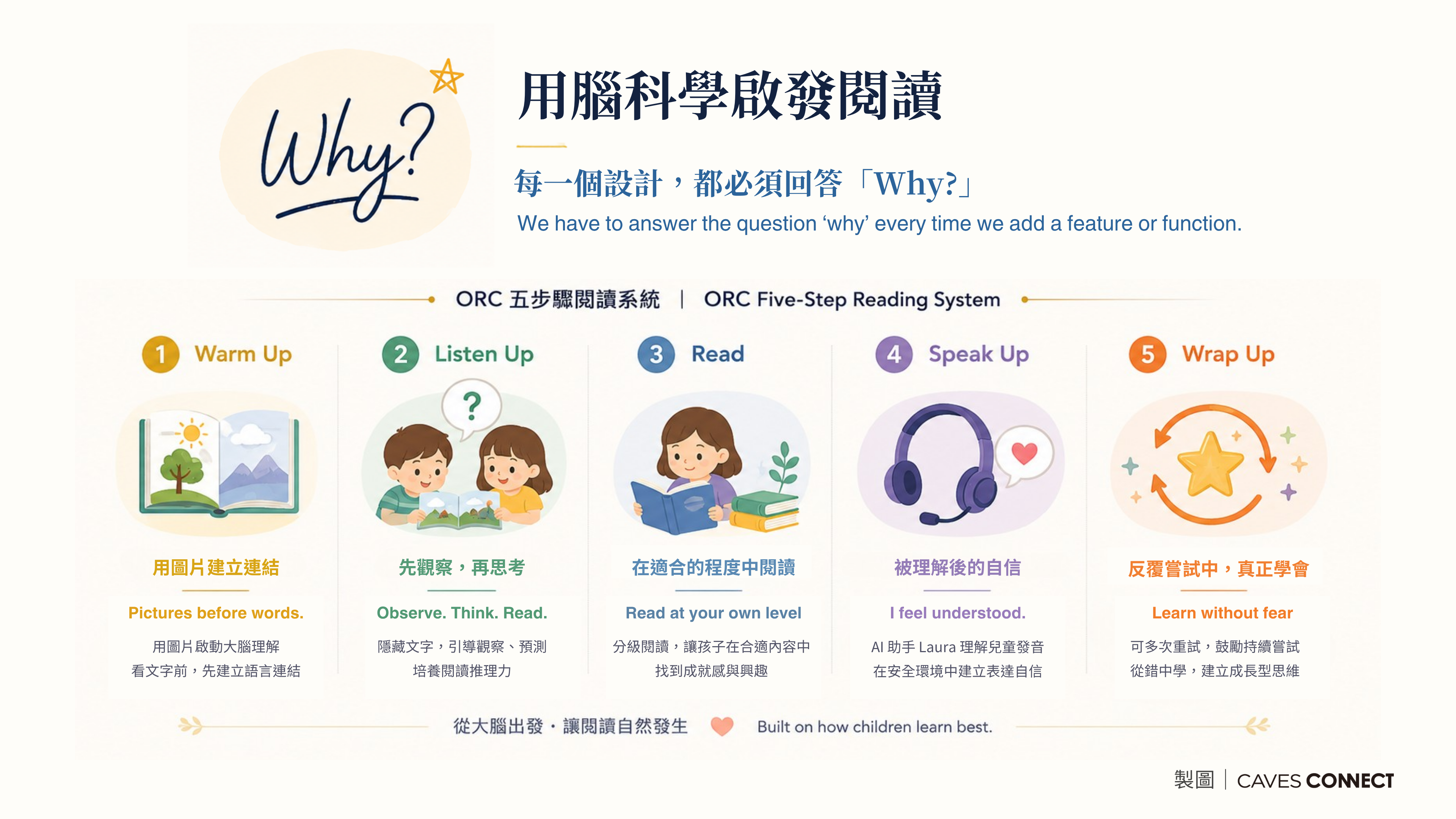 (圖一)
(圖一)
AI 時代,閱讀更重要
「這是一個哲學性的問題。」Robert 認為正因為 AI 崛起,孩子更需要閱讀。
AI 擅長完成任務,但無法取代人類的同理心、韌性、直覺與批判性思考等獨特的人文素養,而這些特質正是透過閱讀培養而來的。
AI 不會發自內心想探究「為什麼」,但人類會。
閱讀能培養孩子提出問題、理解人性,並學會善用 AI 找出問題的解答。Robert 也提到,研究顯示雙語者與大量閱讀者的前額葉皮質發展與問題解決能力之間
有正向關聯。
因此,ORC 除了是英語學習工具,更希望透過閱讀幫助孩子培養 AI 時代不可取代的能力。
給臺灣教育者和家長的一句話
「語言學習必須同時有趣,也要有神經科學支持。」
Robert 特別說了「Reading is fundamental.」這句話。因為在他看來 fundamental 巧妙呼應了 fun 與 mental:閱讀既帶來樂趣,也促進心智發展。
閱讀不只是語言學習的根基,更是終身學習的基礎。當孩子享受閱讀,他們自然能養成陪伴一生的閱讀習慣。

受訪者簡介|Robert Kim
- iPortfolio 創辦人與執行長
- AI科技與英語教育專家
- 聯合國教科文組織肯定:研發之 AI 系統於2024年9月獲 UNESCO 選為「卓越 AI 教育科技案例」
【CC Power Station】 How Reading Shapes the Brain | ORC Designer Robert Kim
As AI reshapes the way we learn, one question remains: What role does reading still play?
Oxford Reading Club (ORC), developed by Oxford University Press, is an online graded reading platform built on the principles of neuroscience and pedagogy. With more than 700 Oxford readers, it supports learners in developing listening, speaking, reading, and writing through a carefully designed five-step reading journey.
We spoke with Robert Kim, the designer of ORC, about the science behind language learning—and why reading may be more important than ever.
Beyond Test Scores
“There is no shortcut for language learning.”
Test scores may improve through repetition, but language grows through meaningful reading over time. Robert argues that when children understand about 70% of a story and enjoy the experience, they naturally want to keep reading. Memorizing isolated vocabulary, on the other hand, often leads to anxiety rather than genuine learning.
How the Brain Learns a Language
Every language learner goes through a silent period. Children may seem to make little progress, but their brains are actively processing and organizing new language. During this stage, giving translations or answers too quickly can interrupt the brain’s natural process of building meaning and forming neural connections.
“We have to answer the question ‘Why?’ every time we add a feature or function.”
Robert recalls receiving a letter from the mother of a ten-year-old child, who shared that reading together had brought their family closer. It reminded him of a CNN article that described reading as “fundamental to the family’s happiness.”
For Robert, reading is more than a learning activity—it is something families grow through together. That philosophy became the foundation of ORC’s Five-Step Reading System.
Why Reading Matters More Than Ever
“This is a philosophical issue.”
Robert believes that the rise of AI makes reading more important, not less.
AI can complete tasks, but it cannot replace unique humanities such as empathy, resilience, intuition, and critical thinking. Those qualities are nurtured through reading.
AI doesn’t ask “why” out of genuine curiosity. Humans do.
Reading encourages children to ask questions, understand people, and learn how to use AI as a tool rather than depending on it.
Robert also points to research suggesting that bilingualism and extensive reading are associated with stronger prefrontal cortex development and better problem-solving skills. For him, reading is not simply about learning a language—it’s about developing the abilities children will need in an AI-driven world.
Through ORC, Robert hopes to turn these ideas into everyday reading experiences for children.
A Message for Educators and Parents in Taiwan
Language learning should be both enjoyable and grounded in neuroscience.
That’s why Robert likes to say, “Reading is fundamental.” For him, the word fundamental playfully echoes both fun and mental, and it reminds use that reading should be enjoyable while also supporting children’s cognitive development.
Reading is not only the foundation of language learning, but also the foundation for lifelong learning. When children enjoy reading, they are far more likely to keep reading.
Interviewee Profile | Robert Kim
- Co-founder & CEO, iPortfolio
- AI Technology & English Education Expert
- UNESCO-Recognized AI Pioneer: selected by UNESCO in Sept 2024 for “Excellent AI in EdTech”