為什麼選擇「筷子」作為英語教具?
筷子是一種需要專注力與手眼協調的工具,當學生使用筷子夾取字母卡時,他們不只是單純完成拼字任務,更會主動去辨識字形、順序,並與隊友確認正確性。這種「身體參與式學習」(embodied learning)能提升記憶深度,使抽象的語言變得具體、有趣、可操作。
活動說明|Activity Description
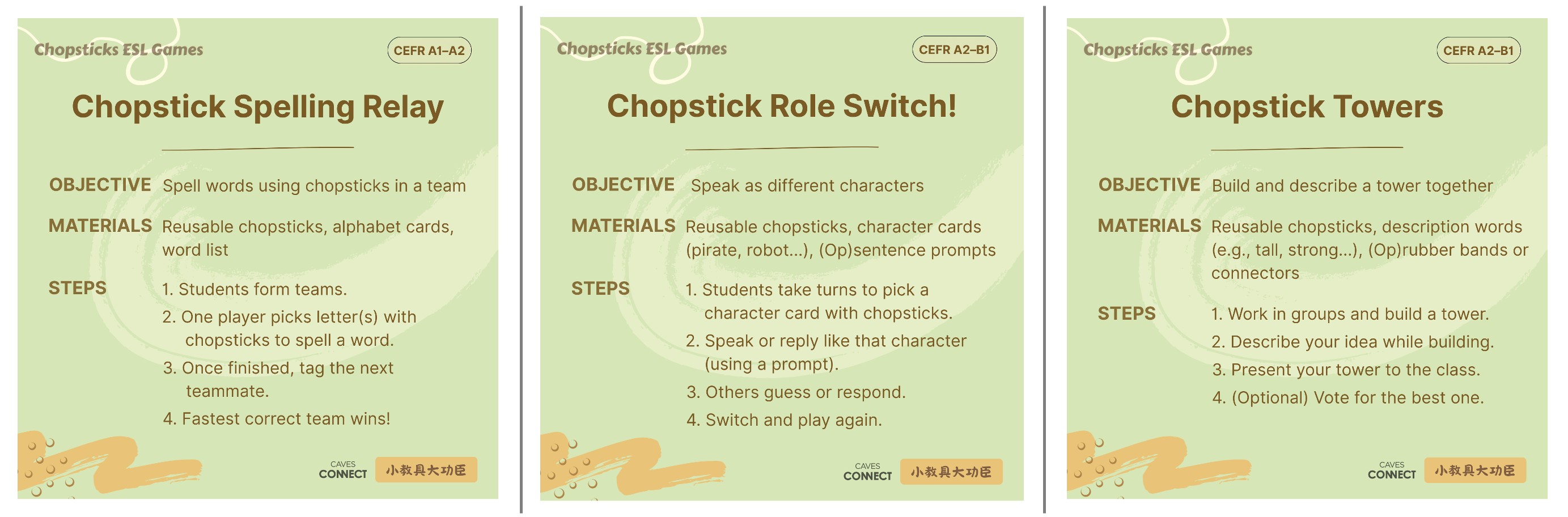 (往下滑看更多詳細活動步驟!)
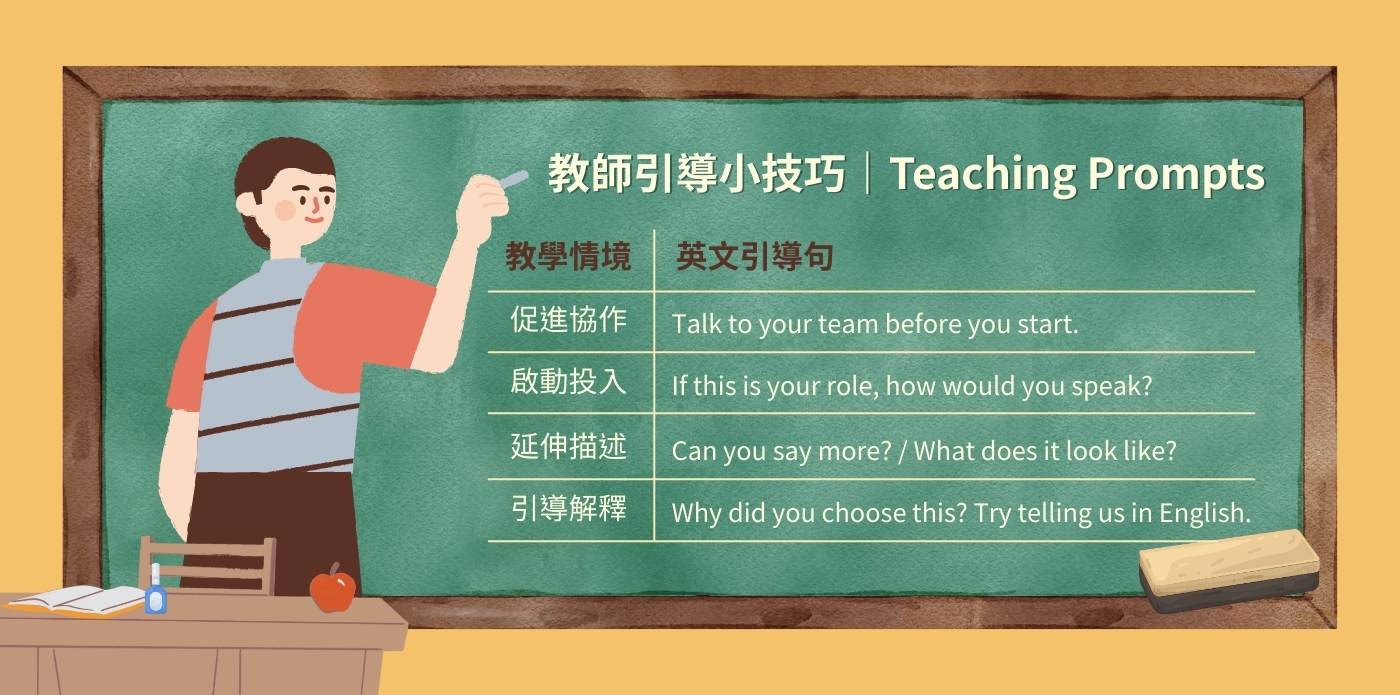
教師引導小技巧|Teaching Prompts
Activity 1:Chopstick Spelling Relay |筷子飛行隊
程度|Level | A1–A2 |
技能|Skills | Spelling / Word Recognition / Teamwork |
材料|Materials | Reusable chopsticks, alphabet cards or tiles, word list |
詳細活動步驟 | Steps
1. Divide students into small teams.
將學生分成小組。
2. Each team receives chopsticks and alphabet tiles/cards.
每組發筷子與字母卡。
3. One student at a time uses chopsticks to pick up letters to spell the target word displayed by the teacher.
學生依序用筷子夾字母,拼出老師指定單字。
4. After completing one word, they pass to the next teammate.
拼完後換下一位隊員上場。
5. The fastest and most accurate team wins.
正確又最快的小組獲勝。
Activity 2:Chopstick Role Switch!|抽到誰就成為誰
程度|Level | A2–B1 |
技能|Skills | Speaking / Role-play / Intonation & emotion expression |
材料|Materials | Reusable chopsticks, role cards/sticks (e.g., pirate, robot, etc.), optional sentence prompts |
詳細活動步驟 | Steps
1. Students form pairs or small groups.
學生分組或兩人一組。
2. One student uses chopsticks to pick a role stick or card.
一位學生用筷子抽出一個角色卡。
3. The student must speak or respond in English as that character.
該學生需以該角色的語氣與身份說出一句話或回應問題。
4. Teammates may guess or respond in character.
同組成員可猜角色或以新角色互動。
5. Switch roles and repeat with different prompts or situations.
換下一位抽卡,進入新情境繼續活動。
Activity 3:Chopstick Towers|我們的筷子基地
程度|Level | A2–B1 |
技能|Skills | Descriptive speaking / Spatial thinking / Presentation |
材料|Materials | Reusable chopsticks, optional rubber bands or connectors, descriptive prompt list |
詳細活動步驟 | Steps
1. Divide students into small groups.
將學生分組。
2. Each group receives chopsticks and optional connectors.
每組獲得筷子與可選的固定材料。
3. Students build a tower or base while describing their design process in English (e.g., “Let’s make it taller / This part is the gate.”).
學生在搭建過程中必須用英文描述結構或策略(例如:「Let’s make it stronger.」)。
4. After finishing, the group presents their tower and explains its function or story.
完成後,小組以英文介紹塔的用途或故事背景。
5. Optional: classmates vote on categories such as “Most Creative,” “Strongest Base,” or “Best Story.”
可選擇設立「最有創意」、「最堅固」、「最有故事性」等票選項目。
結語
在這三個以筷子為核心的活動中,學生不只是在「用筷子」,而是在「用身體參與語言學習」。透過操作、轉換身分與共同建構,他們在互動中練習的不只是英文單字和句型,更是在語境裡表達、協商、描述與想像。當語言與動作、情緒、角色和任務結合時,學習變得更沉浸,也更容易留下記憶的痕跡。